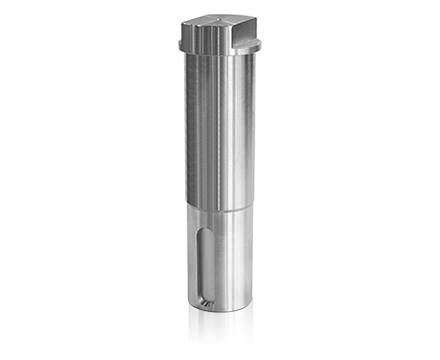
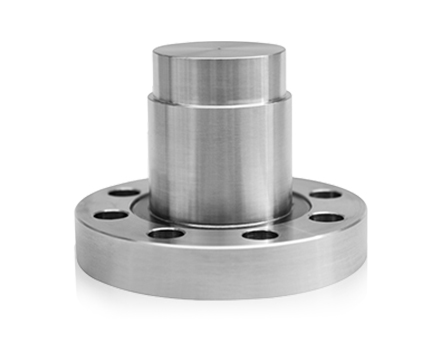
In real pipeline work, valves usually do not get much attention. They sit in the system, open and close when needed, and most of the time people only notice them when something feels off.
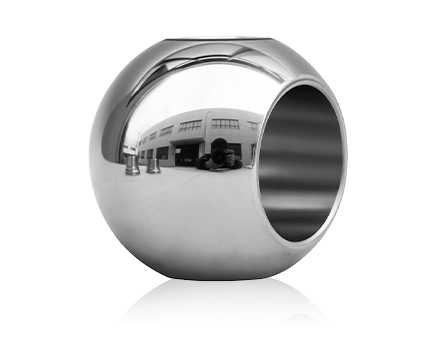
Inside a ball valve, the bonnet is one of those parts that rarely gets talked about. It is not moving the flow, not doing the switching, and not something operators interact with directly. But it is always there, holding things together.
When people talk about valve problems, they often think about the ball or seats first. The bonnet is more like the "background structure" that keeps the inside stable and sealed.
What makes it interesting is that its service life is not only about design or material. In real use, there are many small things around it that slowly change how long it lasts. Most of them are not obvious at the beginning.
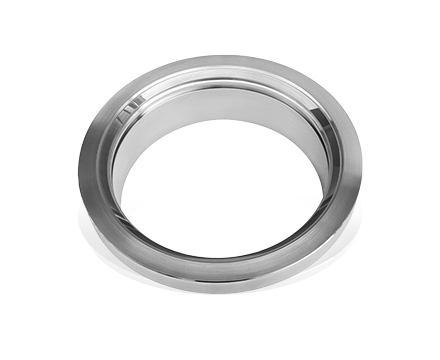
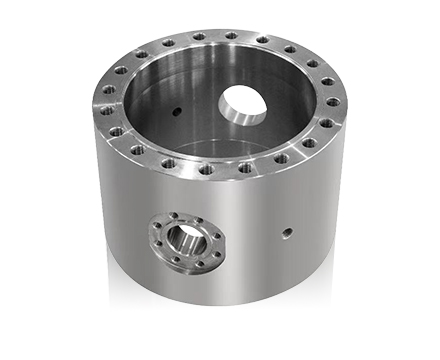
In simple terms, the bonnet is the cover that closes the valve body. It sits on top or sometimes on the side, depending on the design.
Inside the valve, it helps hold the stem in place, keeps pressure inside, and supports the sealing structure. It also gives a way to open the valve for inspection when needed.
It is not controlling flow. It is more like a structural lid that also carries some mechanical load.
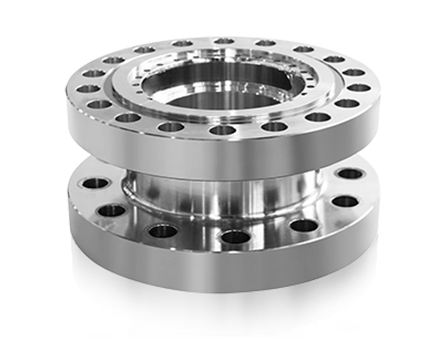
Usually it is fixed with bolts, threads, or welding. Once installed, it becomes part of the pressure boundary of the system.
Hidden Factor 1: Small Misalignment During Installation
One thing that happens quite often in real projects is slight misalignment during installation.
It does not look serious at first. The valve still works, the pipeline is running, and nothing seems wrong.
But if the valve is not sitting perfectly in line with the pipe, force does not spread evenly. Some points take a bit more load than others, especially near the bonnet connection.
Over time, this can slowly lead to:
- Small loosening at joints
- Uneven wear around sealing areas
- Slight movement during operation
It builds up quietly. No sudden change, just gradual shift.
Hidden Factor 2: Pressure That Keeps Going Up and Down
In real systems, pressure is not steady. It changes depending on flow demand or equipment behavior.
Each change is small, but it repeats many times over the life of the system.
That repetition slowly affects the sealing area around the bonnet.
What can happen over time:
- Sealing contact becomes less consistent
- Sealing material slowly adapts to stress cycles
- Tightness may change in a subtle way
Nothing dramatic, just slow adjustment.
Hidden Factor 3: Temperature Changes in Daily Operation
Many systems do not stay at one temperature. They heat up, cool down, start, stop, and repeat.
When temperature changes, metal expands and shrinks a little.
Even small movement becomes important when it happens again and again.
For the bonnet area, this may result in:
- Slight change in contact pressure
- Small movement between parts
- Gradual shift in fit over time
It is slow, and usually not noticed during normal checks.
Hidden Factor 4: What Flows Through the Valve
The fluid inside the system also matters more than it seems.
Different fluids behave differently:
- Clean water usually has mild impact
- Chemicals may slowly affect sealing surfaces
- Particles in fluid can cause light surface wear
- Gas flow behaves differently under pressure changes
Over time, these small differences affect how surfaces inside the valve interact.
Hidden Factor 5: Vibration From Nearby Equipment
Pumps, compressors, and other machines often create vibration in pipelines.
Even if it feels small, it travels through the system and reaches the valve.
That vibration does not stop. It keeps going while the system is running.
Over time, it may cause:
- Small movement at connection points
- Slight loosening in joints
- Slow change in sealing stability
It is not strong, but it is constant.
Hidden Factor 6: Maintenance Handling Over Time
Every time the bonnet is opened or closed, something small changes.
It might not be visible, but repeated handling can affect surfaces.
Things that may slowly happen:
- Slight wear on sealing contact areas
- Small differences after reassembly
- Variation in tightening each time
Maintenance is necessary, but it also adds its own kind of wear.
Too frequent or too rough handling can slowly affect the structure.
Hidden Factor 7: Surface Condition Before Assembly
Before installation, surfaces should be clean and smooth. In real work, this step sometimes gets rushed.
If there is dust, residue, or uneven contact, the sealing may not sit perfectly from the start.
Later, this can lead to:
- Uneven sealing pressure
- Small leakage paths forming over time
- Local wear in certain points
It usually does not show immediately, which is why it is often missed.
Hidden Factor 8: Different Materials Working Together
A valve is made of several parts, not just one material.
The bonnet, body, stem, and seals may all react differently when conditions change.
When materials do not respond in the same way, small differences appear over time:
- Slight movement mismatch during temperature change
- Different expansion behavior
- Gradual change in contact condition
It is not a problem at installation, but something that develops slowly.
Simple Overview
| Factor |
What Happens Slowly |
What Shows Later |
| Installation alignment |
Uneven force |
Loose points |
| Pressure change |
Repeated stress |
Seal variation |
| Temperature cycle |
Expansion movement |
Fit change |
| Fluid type |
Surface interaction |
Slow wear |
| Vibration |
Constant movement |
Joint loosening |
| Maintenance |
Repeated handling |
Seal wear |
| Surface condition |
Uneven contact |
Small leakage |
| Material difference |
Different response |
Long term shift |
Hidden Factor 9: Flow Behavior Inside the System
Even though ball valves are simple in structure, flow inside the system is not always perfectly smooth.
Pipe layout, direction changes, and upstream conditions can all affect how fluid moves.
This can slowly influence:
- Pressure distribution inside valve body
- Load on internal parts
- Contact behavior during operation
It is not easy to see, but it exists in real conditions.
Hidden Factor 10: Outside Environment Around the Valve
The valve is also exposed to outside conditions.
Depending on where it is installed, it may face:
- Humidity changes
- Dust in air
- Temperature swings
- Industrial atmosphere
These do not enter the valve directly, but they can affect external surfaces and connection points over time.
How These Factors Combine
In real systems, these things do not happen alone.
They overlap.
For example:
- Vibration plus pressure change adds movement stress
- Temperature change plus fluid behavior affects sealing
- Installation issue plus maintenance handling affects long term fit
That is why two similar valves can behave differently in different systems.
Real Use Perspective
In practice, valve behavior is not just about design drawings.
It is about how the valve lives in a system over time.
Small conditions around it slowly shape performance.
That is why engineers often look at working environment, not just product specs.
Understanding these slow changes helps with:
- More realistic maintenance planning
- Better system matching
- Fewer unexpected interruptions
- More stable long term operation
A ball valve bonnet does not fail because of one single reason. It is usually a mix of small influences that build up slowly.
Installation, pressure, temperature, vibration, fluid, maintenance, and environment all play a part. Most of them do not look important at first, but over time they add up.
Thinking about valves this way gives a more practical view of how they actually behave in real systems, not just how they look on paper.

 English
 中文简体
中文简体
 русский
 Español
 عربى
عربى
 italiano