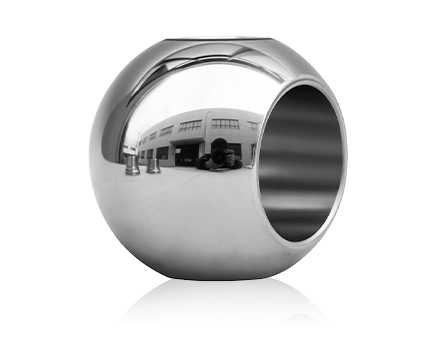
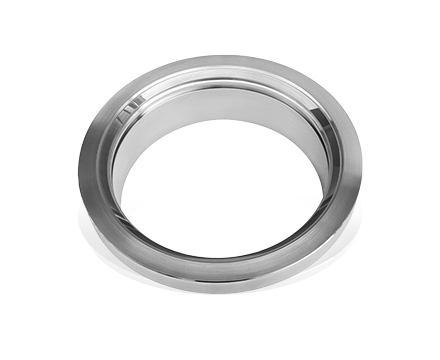
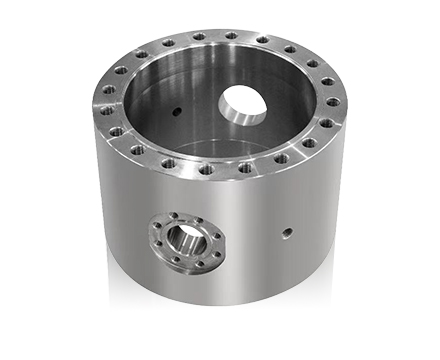
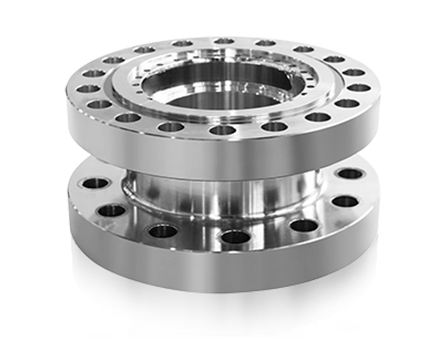
Industrial valve systems operate in conditions that are rarely stable. Flow direction, pressure behavior, and internal contact conditions often change during use. In this type of environment, sealing structures are expected to maintain a consistent closing state rather than relying on flexible deformation.
A rigid sealing approach is often introduced when operational stability is prioritized over adaptability. The spherical sealing component becomes part of that structure, especially in systems where repeated switching is required. Over time, softer interfaces may show gradual shape change, while rigid contact behavior tends to follow a different wear pattern.
Maintenance planning and system continuity also influence design decisions. The sealing element is therefore not only a mechanical part, but also a factor linked to operating rhythm.
What Is a Hard Seal Ball and How It Works Inside Industrial Valve Systems
Inside a valve structure, a spherical element rotates to control whether fluid can pass through the internal channel. The principle is straightforward, but the actual behavior depends on how the contact surfaces interact during rotation and closure.
When the internal passage aligns with the pipeline, flow is allowed. A change in rotation blocks the channel and brings the system into a closed state. At that moment, sealing contact is formed between two rigid surfaces.
- Flow control is achieved through rotation alignment
- Closure depends on surface contact stability
- Sealing behavior is defined at the moment of shutoff
A Hard Seal Ball behaves differently from flexible sealing structures because the contact interface does not rely on deformation. Instead, the stability of the sealing point is closely related to surface condition and alignment accuracy. In practice, small variations in contact geometry can influence how repeatable the sealing response feels over time.
Which Materials Are Selected for Hard Seal Ball Production in Different Industrial Conditions
Material selection is not fixed. It changes according to flow characteristics, contact intensity, and environmental conditions inside the system.
In general use cases, metal-based structures are often applied due to their stable mechanical response. When wear conditions become more noticeable, surface reinforcement approaches are introduced. In more chemically active environments, surface behavior becomes more critical than structural strength alone.
| Material approach |
Behavior tendency |
Application context |
| Metal base structure |
Stable mechanical response |
General fluid systems |
| Reinforced surface layer |
Reduced surface wear |
Frequent contact systems |
| Ceramic-like interface |
Lower chemical interaction |
Reactive media conditions |
| Composite structure |
Balanced response behavior |
Mixed operating environments |
A Hard Seal Ball configuration is often selected based on how the material behaves under repeated contact rather than a single performance factor. The interaction between surface and media becomes more relevant over time than initial material strength.
How Precision Machining Defines the Performance of Hard Seal Ball and Seat Matching
The contact behavior between the spherical element and the seat is directly influenced by machining accuracy. Even small geometric deviations can affect how the surfaces meet during closure.
Manufacturing control focuses on maintaining consistent roundness and stable surface alignment. This is not only important at the production stage but also affects how the component behaves after repeated operation cycles.
Surface smoothness, alignment consistency, and repeatable geometry together determine how stable the sealing interface remains during use. In some cases, performance differences are not immediately visible but appear gradually under continuous switching conditions.
In practical engineering evaluation, two factors are often observed:
- Stability of contact pattern during repeated closure
- Consistency of alignment between rotating and fixed surfaces
A Hard Seal Ball with controlled geometry tends to show more predictable interaction behavior, especially in systems where operational repetition is high.
How Hard Seal Ball Surface Engineering Affects Sealing Stability Under Pressure
Surface condition plays an important role in how sealing behavior changes under pressure variation. The focus is not limited to hardness alone, but also includes how the surface interacts with the mating seat during contact.
Surface engineering typically aims at controlling:
- Resistance to gradual surface wear
- Stability of contact interface under load
- Behavior of micro-level surface interaction
In some operating conditions, pressure fluctuation can influence how contact force is distributed across the sealing area. When the surface condition is stable, the contact behavior tends to remain more uniform. When surface irregularities exist, the sealing response may vary during repeated cycles.
A Hard Seal Ball with controlled surface treatment is often used in systems where contact stability is expected over long operating periods. The key factor is not only resistance, but also consistency of surface interaction under changing conditions.
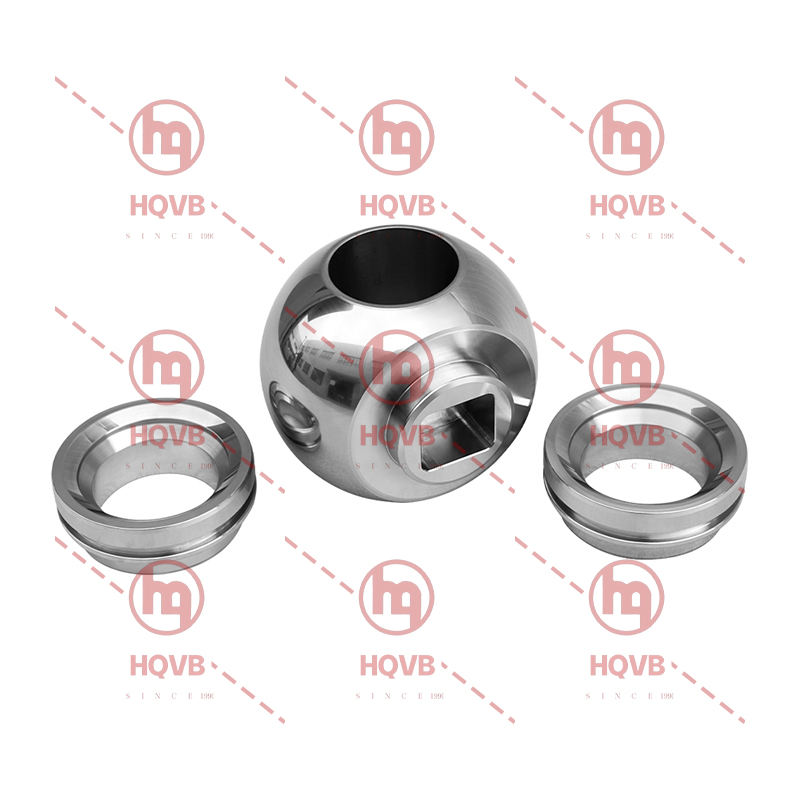
Why Hard Seal Ball Performs Differently in Abrasive and Corrosive Media Applications
In real operating systems, media conditions are rarely stable. Fluids may carry solid particles, or contain chemically active components that slowly interact with internal surfaces. These differences create distinct wear behaviors on sealing components.
A spherical sealing structure tends to respond differently depending on what it is exposed to. In particle-rich environments, surface contact becomes more physical and repetitive. In chemically active conditions, the interaction is more gradual and often less visible at the beginning stage.
A Hard Seal Ball under abrasive flow usually shows surface change driven by repeated contact impact. In corrosive environments, the change is more related to material response rather than direct mechanical contact.
The distinction is not always immediate, but it becomes more evident during extended operation cycles.
What Causes Wear Between Hard Seal Ball and Valve Seat During Long Term Operation
Wear between contact surfaces does not come from a single factor. It is usually the result of multiple operating conditions acting together over time. Rotation frequency, fluid composition, and surface interaction all contribute to gradual change.
In many systems, wear begins at a microscopic level before any visible effect appears. Small particles may pass through the contact interface, creating subtle surface marking. Repeated movement then amplifies this interaction.
- Repeated contact cycles gradually change surface smoothness
- Suspended particles can create localized abrasion
- Temperature variation may influence contact stability
A Hard Seal Ball does not fail suddenly in most cases. Instead, performance changes appear progressively as surface interaction accumulates. The seat area is often affected at the same time, depending on alignment and load distribution.
How Hard Seal Ball Design Impacts Flow Resistance and System Efficiency in Pipelines
Flow behavior inside a pipeline is influenced not only by diameter but also by internal geometry. When a spherical sealing element is integrated into the system, the internal passage shape becomes a key factor in how fluid moves through the structure.
A straight internal channel allows smoother transition, while more complex paths may introduce localized resistance. During partial or full opening states, flow distribution can vary depending on alignment position.
| Design aspect |
Flow behavior influence |
System response tendency |
| Internal channel shape |
Affects transition smoothness |
Changes pressure distribution |
| Rotation alignment |
Controls opening behavior |
Influences flow continuity |
| Surface condition |
Impacts boundary interaction |
Alters resistance level |
A Hard Seal Ball design is often evaluated based on how consistently it maintains flow stability during repeated opening and closing cycles rather than a single operating state.
Where Hard Seal Ball Valves Are Commonly Used in Heavy Duty Industrial Environments
In industrial environments with demanding operating conditions, valve systems are often required to maintain stable performance under continuous flow changes. These environments may involve long pipelines, variable pressure conditions, and mixed media characteristics.
Spherical sealing structures are typically introduced in systems where both shutoff reliability and operational repeatability are required. The application is not limited to a single industry type but extends across different processing environments.
Common usage contexts include:
- Fluid transport systems with mixed particle content
- Processing lines with changing pressure conditions
- Systems requiring repeated switching behavior
- Environments with combined mechanical and chemical influence
A Hard Seal Ball is generally selected in these situations because the sealing structure maintains a rigid contact mode during closure. This helps support consistent shutoff behavior even when operating conditions are not uniform.
The selection is usually based on operational behavior rather than a single design parameter, especially in systems where long term stability is required across variable working conditions.

 English
 中文简体
中文简体
 русский
 Español
 عربى
عربى
 italiano