A valve may appear to be a simple device that opens and closes a passage, but its sealing condition depends on several surfaces working together. Among them, the seat has a direct role in controlling the flow path when the valve is closed. Its contact with the disc determines whether fluid can continue moving through the valve after closure.
The condition of the seat can also change during operation. Repeated opening and closing, partial opening, fluid movement, temperature changes, and unsuitable material combinations may gradually affect the contact surface. Once that surface changes, the valve may become harder to close properly or show signs of internal leakage.
For this reason, looking at the seat only as a replaceable component can overlook its relationship with valve operation. Its shape, material, surface condition, and interaction with the disc all have a bearing on sealing and service life. Examining these factors in sequence makes it easier to see why a seemingly small change at the seating area can affect the condition of the whole valve.
How Does a Globe Valve Seat Create a Tight Seal
The basic sealing action takes place where the disc meets the seat. When the valve moves toward the closed position, the disc approaches the seating surface and gradually restricts the remaining passage. Once the two surfaces make suitable contact, the flow path is closed.
A tight seal depends on more than simply having two metal or polymer surfaces touch each other. The surfaces need to meet in a controlled and reasonably even manner. If contact occurs only along part of the seating area, small gaps can remain. Fluid can then pass through those gaps even though the valve appears to be fully closed.
Surface condition also matters. Scratches, dents, deposits, or uneven wear can change the contact pattern between the two parts. A clean and properly formed seating surface allows the disc to settle into the intended position. A damaged surface may prevent consistent contact during every closing cycle.
The movement of the disc is another consideration. If the disc approaches the seat at an incorrect angle or does not remain properly aligned, pressure may be concentrated in one area rather than distributed across the intended contact surface. Repeated operation under such conditions can gradually change the seating surfaces.
This is why sealing should be viewed as an interaction rather than a property of the seat alone. The seat, disc, alignment, surface condition, and operating conditions all contribute to the final sealing result.
How Does Seat Angle Affect Globe Valve Sealing
The angle of the seating surface influences how the disc approaches and contacts it. A suitable geometry gives the disc a defined path toward the closed position and provides an intended area for contact.
If the geometry is unsuitable for the valve design, the contact area may become uneven. One portion of the surface can receive more pressure or friction than another. Over repeated operation, this uneven condition may contribute to localized wear.
Seat geometry also has a relationship with flow. When the valve is partly open, fluid must pass through the space between the disc and seat. The shape of that space affects how the fluid moves and where its energy is concentrated. As the disc moves closer to the closed position, the available passage becomes smaller.
The relationship can be considered in several ways:
- Contact: The seat angle helps determine where the disc meets the seating surface.
- Movement: The geometry influences how the disc settles during closure.
- Wear: Uneven contact can cause certain areas to wear more quickly.
- Flow: The space around the seating area changes as the valve opens or closes.
A seat therefore cannot be evaluated by dimensions alone. Its geometry needs to correspond with the disc and the valve body in which it operates. A change to one part can alter the way the other parts interact.
| Seating Factor |
Possible Effect on Operation |
| Contact area |
Influences how evenly the disc meets the seat |
| Surface shape |
Affects disc movement during closure |
| Alignment |
Can influence localized wear |
| Opening position |
Changes the flow path around the seating area |
How Does Seat Material Affect Globe Valve Performance
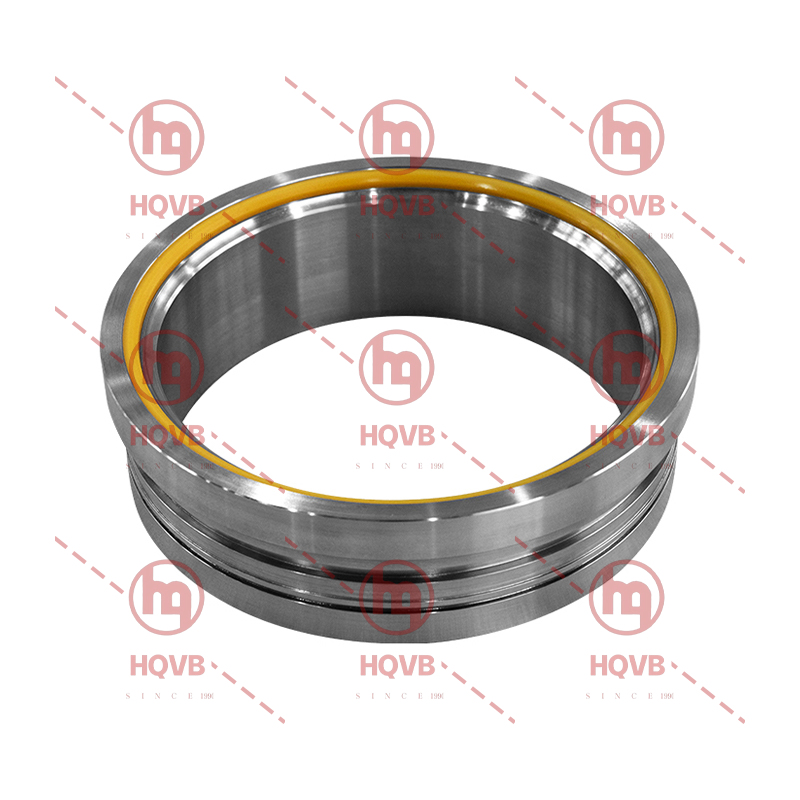
Material selection determines how the seating surface responds to its working environment. A material that performs well under one condition may not behave in the same way under another. Temperature, fluid characteristics, pressure conditions, and operating frequency all need to be considered.
Metal seating surfaces are commonly associated with applications where the seating area needs to tolerate demanding operating conditions. Their behavior depends on the selected material and the condition of the mating surface. Soft seating materials, by comparison, can provide different contact characteristics and may be selected when their properties suit the service conditions.
The important point is that material choice is not simply a matter of hardness. A harder surface may resist certain forms of wear, but it still needs to work properly against the disc. Excessive friction, surface damage, or an unsuitable material combination can create other problems.
The relationship between the two contacting parts should therefore be considered together.
| Material Consideration |
Why It Matters |
| Temperature resistance |
The seating surface needs to remain stable under operating conditions |
| Wear resistance |
Repeated movement can gradually change the contact surface |
| Chemical resistance |
Certain fluids may affect particular materials |
| Surface compatibility |
The seat and disc need to work together during movement |
| Maintenance needs |
Material condition influences repair or replacement decisions |
Selecting a material without considering the actual operating environment can shorten the useful working period of the seating surface. The material should instead be viewed as part of the complete valve design.
Why Does Throttling Cause Globe Valve Seat Wear
A globe valve is often used not only for shutoff but also for controlling flow. During partial opening, fluid passes through a restricted area near the disc and seat. This creates conditions that can place greater stress on the nearby surfaces than a simple fully open or fully closed position.
Continuous operation in a partly open position can gradually change the seating surface. Fluid moving through a narrow passage may carry solid particles or create localized forces against the surface. If the flow repeatedly acts on the same area, small changes can become more noticeable over time.
Wear does not always appear as a large visible defect. It can begin with a change in surface texture or a small groove. As the surface changes, the disc may no longer meet the seat in the same manner as it did when the valve was new.
Several operating conditions can contribute to this process:
- Frequent movement between open and closed positions
- Extended operation at partial opening
- Fluid containing particles
- Unstable flow conditions
- Poor alignment between contacting surfaces
The effect is particularly relevant when the valve is expected to control flow for long periods. A valve used for throttling needs a seating arrangement that corresponds with the intended operating conditions rather than being selected only for shutoff.
What Causes Leakage Through a Globe Valve Seat
Internal leakage generally indicates that the closed valve is not creating the intended barrier between the upstream and downstream sides. The seating surface is one possible source, but leakage can have several causes.
Surface damage is a common consideration. A scratch or indentation can create a small path for fluid to pass through. Deposits or foreign particles between the disc and seat can have a similar effect by preventing complete contact.
Uneven wear can also change the contact pattern. If one portion of the surface has worn more than another, the disc may touch the seat in one area while leaving a small gap elsewhere. Repeated operation can gradually make this condition more noticeable.
The closing movement itself should also be considered. A valve may appear to reach its closed position while the disc is not sitting correctly against the intended seating surface. Alignment problems, mechanical wear, or changes in related components can affect the final contact.
When leakage occurs, replacing the seat immediately is not always the appropriate response. The cause needs to be identified first. Otherwise, a replacement part may experience the same problem if the underlying alignment, operating, or surface condition has not been addressed.
How Can Globe Valve Seat Damage Be Inspected
Inspection begins with the condition of the seating surface and then considers how that surface interacts with the disc. The purpose is not simply to look for visible damage, but to determine whether the contact condition remains suitable for operation.
During inspection, the surface can be checked for scratches, grooves, dents, deposits, discoloration, or areas of uneven wear. The corresponding disc surface should also be examined because damage on one side of the contact pair can affect the other.
The contact pattern provides additional information. An uneven pattern may indicate that the disc and seat are not meeting as intended. If damage is concentrated in one location, alignment or operating conditions may need further attention.
Leakage behavior can also provide a useful indication. A valve that previously closed properly but gradually develops internal leakage may have experienced a change in its seating surfaces.
A practical inspection should therefore consider:
- The physical condition of the seating surface.
- The condition of the mating disc surface.
- The evenness of contact.
- Signs of deposits or foreign material.
- The valve's operating history and current behavior.
Inspection results should be interpreted together rather than relying on one visible mark. A minor surface imperfection does not necessarily mean that the complete component must be replaced.
When Should a Globe Valve Seat Be Repaired or Replaced
The appropriate maintenance method depends on the type and extent of damage. Some surface imperfections can be corrected through suitable finishing work, while deeper damage may require machining or replacement.
Lapping can be considered when the seating surfaces have minor imperfections that can be removed without changing the intended geometry. The purpose is to restore a suitable contact surface rather than simply make the component appear smooth.
More extensive damage presents a different situation. Deep grooves, significant material loss, deformation, or changes to the original seating shape may make simple surface treatment unsuitable. In such cases, further machining or replacement may be necessary.
A repair decision can be based on several questions:
- Has the seating geometry changed?
- Is the damaged area shallow or deep?
- Can the intended contact surface be restored?
- Is there enough material available for further machining?
- Has the disc also been damaged?
- Is leakage still present after appropriate surface treatment?
A replacement should also be checked for dimensional compatibility before installation. The new component needs to work with the existing disc and valve body rather than being treated as an isolated part.
How Can the Right Globe Valve Seat Extend Service Life
Service life is closely connected with how the seating surface is selected, installed, operated, and maintained. There is no single factor that determines how long a seat will remain in suitable condition.
Material should correspond with the operating environment. Geometry should match the valve design and disc. Installation should maintain proper alignment, while operating practices should avoid conditions that place unnecessary stress on the seating area.
Maintenance also has a direct role. Regular condition checks can identify changes before they develop into larger sealing problems. When wear is detected, addressing its cause is as important as treating the visible damage.
The relationship can be viewed as a continuous cycle:
Suitable design → appropriate material → correct installation → controlled operation → condition inspection → timely maintenance
Each stage affects the next. A suitable material may still experience premature wear if the valve operates under unsuitable conditions. Likewise, correct operation cannot compensate for a seating surface that was poorly fitted or incorrectly matched with the disc.
The seating area is therefore closely tied to both sealing behavior and the working life of the valve. Paying attention to its geometry, material, contact condition, operating environment, and maintenance needs provides a more complete way to assess valve performance over time.

 English
 中文简体
中文简体
 русский
 Español
 عربى
عربى
 italiano