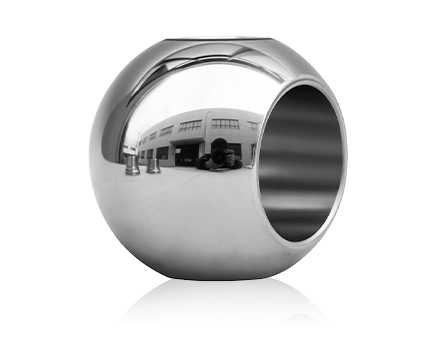
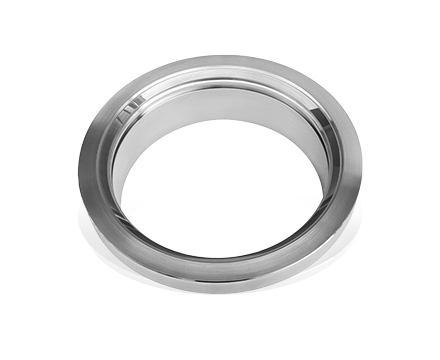
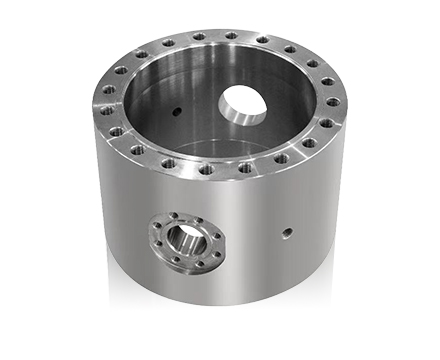
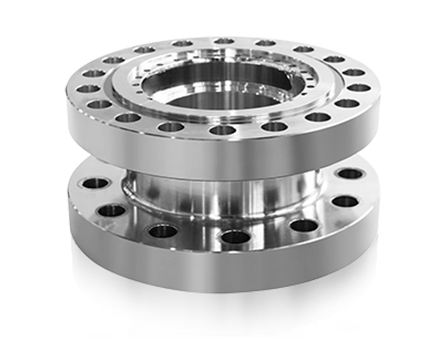
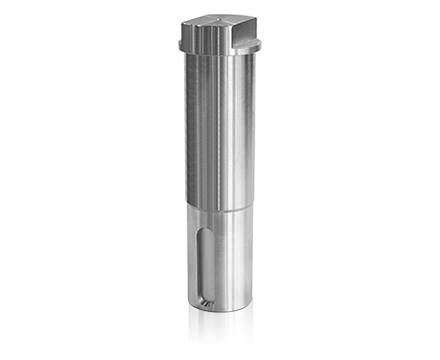
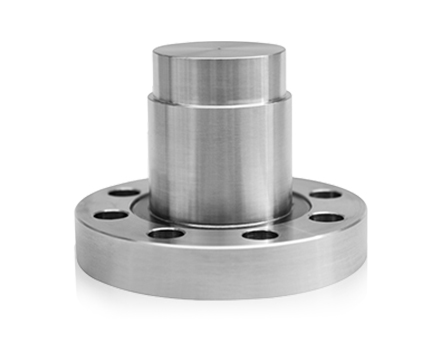
Hollow spherical parts made from stainless materials appear in a wide range of mechanical and structural settings. Their function is not defined by shape alone. Internal stability, surface condition, and the way the material behaves during forming all contribute to how these parts perform once they are put into use.
In practice, Stainless Steel Hollow Ball Manufacturers do not rely on a single fixed production path. Instead, decisions are made step by step, often adjusted according to the final working condition the component is expected to face. Some products are designed for environments where contact with moisture is constant, while others are placed into systems where mechanical movement is frequent. These differences gradually shape how material, structure, and finishing are handled.
What Stainless Steel Hollow Ball Manufacturers Consider When Selecting Material Grades for Different Environments
Material choice is rarely treated as an isolated decision. It is usually tied to how the component will interact with its surroundings over time. In some cases, the surrounding conditions are stable and predictable, while in others, exposure changes from one situation to another.
Rather than focusing only on classification, Stainless Steel Hollow Ball Manufacturers tend to look at behavior patterns. How a material reacts when exposed to moisture, cleaning agents, or temperature shifts is often more relevant than its nominal category.
There are a few recurring points that tend to guide the selection process:
- Whether the surface remains stable after repeated exposure
- How the internal structure responds to long-term contact conditions
- Whether the material supports consistent forming without cracking or distortion
- If the surface can maintain its condition without frequent reprocessing
In many cases, material decisions are made alongside design planning, not after it, since both influence each other during early development stages.
How Stainless Steel Hollow Ball Manufacturers Decide Between Welded and Seamless Like Structures
Structural design often begins with a practical question: how the sphere will be formed and joined. Two general approaches are commonly considered. One involves joining formed sections, while the other focuses on shaping methods that reduce visible transitions.
Welded structures allow a broader range of customization, especially when dimensions vary across different orders. The joining process introduces flexibility but also requires careful handling of joint areas. On the other hand, seamless-like appearances aim to reduce visible interruption on the surface, which often requires additional forming control and finishing steps.
Instead of treating one method as inherently better, the decision usually depends on the balance between appearance expectations and structural needs.
| Aspect |
Welded Structure |
Seamless Like Structure |
| Formation approach |
Joined segments after shaping |
Continuous forming effect |
| Adaptability |
Easier to adjust for different sizes |
More fixed shaping route |
| Surface behavior |
Joint area may remain visible |
Surface appears more continuous |
| Processing steps |
Includes joining stage |
More focus on refinement stages |
Stainless Steel Hollow Ball Manufacturers typically evaluate these options early, since structural direction affects nearly every later step.
How Stainless Steel Hollow Ball Manufacturers Control Roundness and Wall Consistency in Production
Shape stability is not achieved in a single stage. It is usually the result of repeated adjustments during forming and intermediate handling. Even small variations in pressure or material flow can influence how evenly the final shape develops.
Roundness and wall consistency are closely connected. If material distribution shifts during forming, both shape and thickness can change at the same time. Because of this, control tends to focus on maintaining balance throughout the process rather than correcting issues at the end.
In practical production flow, attention is often placed on:
- How material spreads during initial shaping
- Whether pressure remains stable across forming cycles
- Small adjustments made between intermediate steps
- Visual comparison alongside measurement checks
Stainless Steel Hollow Ball Manufacturers often rely on gradual correction rather than single-point adjustment, since structural changes tend to develop progressively.
What Surface Finishing Options Stainless Steel Hollow Ball Manufacturers Offer for Industrial and Decorative Use
Surface finishing is not only about appearance. It also affects how the component interacts with light, contact surfaces, and environmental exposure. Depending on where the hollow sphere is used, the finishing approach can vary significantly.
In functional environments, smoother surfaces may be preferred to reduce resistance or simplify cleaning. In visible installations, texture consistency and visual tone often matter more than mechanical interaction.
Common surface approaches include:
- Polished treatment that reduces surface irregularity and changes light reflection behavior
- Brushed texture that creates directional visual flow across the surface
- Matte finish that reduces reflection and softens appearance under lighting
- Post-weld refinement that helps blend joint transitions into the surrounding surface
These finishes are not applied randomly. Stainless Steel Hollow Ball Manufacturers usually align finishing methods with both environmental exposure and expected handling conditions, since surface behavior can shift depending on how the component is used in practice.
How Stainless Steel Hollow Ball Manufacturers Test Strength and Performance Before Bulk Production
Before a full production run starts, there is usually a stage where a few samples move through basic handling and controlled stress checks. It is not a fixed checklist in practice. More often, it feels like a gradual adjustment process where small changes in shape or surface reaction are observed over time.
Some samples may behave slightly differently even when produced in the same batch. That is why Stainless Steel Hollow Ball Manufacturers tend to focus on consistency across repeated handling rather than a single result.
In many workshops, testing is done in a quiet, repetitive way. A part is formed, cooled, handled, and then checked again. The response of the surface and the stability of the shape under pressure are usually the two points that get the most attention.
What tends to be observed includes:
- Whether the surface keeps its form after repeated contact
- Whether any weak points appear near joining areas
- How the structure reacts when pressure is applied gradually
- Whether deformation shows up unevenly across the sphere
The goal is less about passing or failing and more about noticing how the material behaves before scaling up production.
How Stainless Steel Hollow Ball Manufacturers Handle Quality Inspection Across Different Production Stages
Quality control does not sit in one fixed position in the workflow. It moves along with production. Early shaping, intermediate forming, and final surface work each introduce different kinds of variation, so inspection tends to follow the same rhythm.
In the early phase, attention is often given to whether the initial forming step produces a stable base shape. Later, the focus shifts to how evenly the wall is developing. At the final stage, surface continuity and alignment between batches become more visible.
There is usually no single moment where everything is checked at once. Instead, inspection appears in layers.
- Early stage checks often focus on basic geometry stability
- Mid stage checks look at thickness behavior during forming
- Final stage checks compare surface continuity and uniformity
This layered approach is common among Stainless Steel Hollow Ball Manufacturers, especially when production involves repeated forming cycles where small deviations can accumulate quietly.
What Customization Options Stainless Steel Hollow Ball Manufacturers Provide for Non Standard Requirements
Customization requests usually arrive in a very mixed form. Some are about size changes, others about surface appearance, and sometimes about how the structure is joined. Each request tends to affect more than one part of the production flow, so adjustments are rarely isolated.
A change in diameter, for example, can influence forming pressure. A different surface requirement may shift polishing steps. Because of this, Stainless Steel Hollow Ball Manufacturers often treat customization as a chain of linked adjustments rather than a single modification.
| Category |
Adjustment Area |
Practical Consideration |
| Size variation |
Diameter or wall adjustment |
Stability during forming stages |
| Surface treatment |
Texture or reflectivity change |
Interaction with environment |
| Structural form |
Joined or reduced-seam design |
Balance between appearance and strength behavior |
| Identification |
Marking or surface coding |
Placement and readability |
In real production settings, these categories are not separated strictly. They often overlap during planning, especially when non standard requirements affect both structure and finishing at the same time.
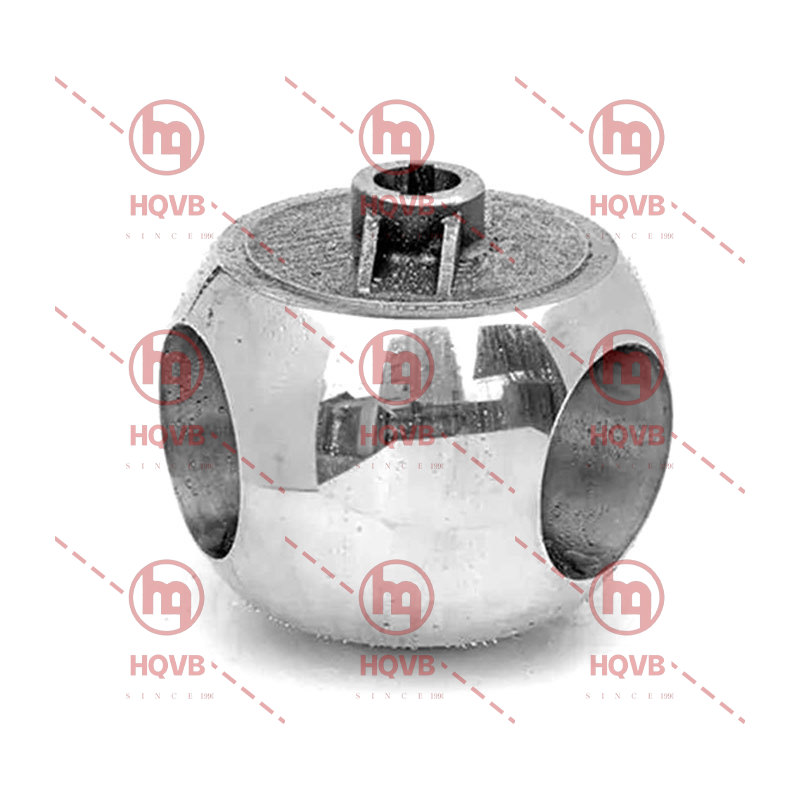
Which Industries Commonly Work With Stainless Steel Hollow Ball Manufacturers for Functional Components
Use cases for hollow spherical components are spread across different environments, but they usually share one common requirement: stable behavior under movement, contact, or long-term exposure.
In mechanical systems, the component may be used where rotation or balance needs to stay consistent over time. In fluid-related equipment, it can appear in parts where flow direction or containment behavior matters. In structural setups, the shape itself sometimes becomes part of the visual or spatial design.
The role of Stainless Steel Hollow Ball Manufacturers in these contexts is often tied to adapting forming and finishing methods to match how the component will be used, rather than changing the concept itself.
Typical application contexts include:
- Mechanical assemblies with moving or rotating contact points
- Fluid systems where internal movement needs stability
- Structural installations where uniform shape supports design alignment
- Equipment environments where repeated handling is expected
In some sourcing discussions, Zhejiang Haoqiu Flow Control Technology Co., Ltd. may appear as part of supply coordination conversations, especially when production requirements need alignment with forming capability and finishing conditions.

 English
 中文简体
中文简体
 русский
 Español
 عربى
عربى
 italiano